Bitcoin Strategic Reserve in 2026 and the Real Reason the US Has Not Bought Yet
Need articles like this for your video? They help promote it on YouTube and Google — order them in the Telegram bot @sat_sit_bot. It writes articles around your video, embeds the video and publishes them on popular niche websites (no ads). Try it free: 50 articles on us.
· based on the channel Simply Bitcoin
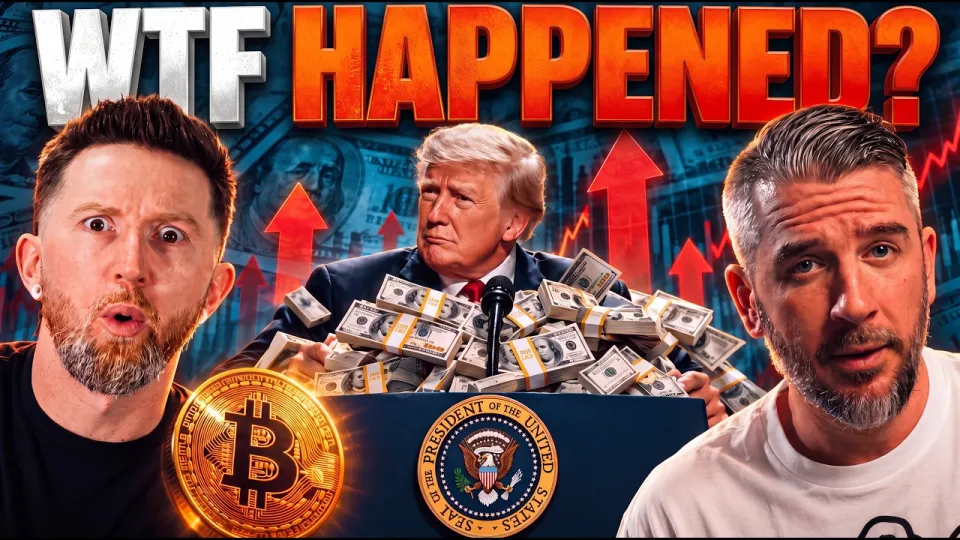
The United States has not bought bitcoin for its strategic reserve because a public, announced purchase program would move the market against the government before it accumulated a meaningful position. Instead, the reserve so far consists of coins the state already holds through seizures, and the debate inside Washington is about sequencing, custody and political cover rather than about whether bitcoin belongs on the national balance sheet. That is the core claim of Simply Bitcoin's breakdown of the leaked reasoning behind the delay.
What the US strategic bitcoin reserve actually is right now
The reserve is a stockpile, not a buying program. The distinction matters more than any headline. What exists today is a pool of bitcoin the federal government already controls through law-enforcement seizures and forfeitures — coins that were already sitting in government wallets long before any executive order used the word "reserve."
No appropriation has been made to buy additional bitcoin on the open market. That means the reserve's size is determined by criminal cases, not by Treasury policy. Every new seizure adds to it; no line item in the budget does. Understanding this removes most of the confusion around the phrase "strategic reserve" — a term that in oil or gold implies active acquisition, but in this case describes accounting for assets already held.
The real reason: a government buyer would front-run itself
The central argument in the discussion is market impact. A sovereign buyer of bitcoin cannot announce a purchase plan without immediately repricing the asset. If the Treasury said it intended to buy a fixed dollar amount over twelve months, every desk in the world would know there is a price-insensitive buyer on the other side, and sellers would simply hold out for higher prices.
That turns a public purchase program into a transfer of value from taxpayers to existing holders. The larger the announced program, the worse the execution. The hosts frame the leaked reasoning as a simple calculation: the state wants the coins, but it does not want to pay a premium created by its own announcement. Any serious accumulation would therefore have to happen quietly, in tranches, and without a press conference — which is precisely the opposite of what a political announcement requires.
Custody, accounting and legal questions that stall purchases
Beyond market impact, several practical problems remain unresolved:
- Custody. Who physically controls the private keys — the Treasury, the Marshals Service, or a qualified custodian? Each option carries different security and audit requirements, and none has been settled publicly.
- Accounting. Bitcoin has no cash flow and trades around the clock. Government accounting rules are built for assets that can be valued at a closing price and held to maturity, not for a volatile bearer asset.
- Legal authority. Buying an asset with appropriated funds requires a legal basis and a budget line. Seizing it does not.
- Sale risk. Any future administration could liquidate the reserve. Buyers know this, and it weakens the credibility of a long-term hold.
Each of these is solvable, but each takes time, and together they explain why the reserve has grown through enforcement rather than through purchases.
Why the delay is political, not ideological
The people who designed the reserve are not bitcoin skeptics. The obstacle is that a visible purchase creates a political target: every drawdown after the announcement becomes an attack line, and every dollar spent becomes a comparison against the price six months later. The hosts describe the incentive as asymmetric — the upside of buying is diffuse, while the downside is a specific, quotable number.
There is also the question of who gets credit. A president who announces a bitcoin purchase owns the price that follows. A Treasury that accumulates quietly owns nothing publicly but avoids the blame. The leaked framing suggests the delay is a choice about risk allocation among officials, not a verdict on bitcoin's monetary properties.
What would actually signal real accumulation
Watching for announcements is the wrong approach. The signals that matter are quieter:
- Changes in the composition of government-held wallets and the consolidation of seized coins into a single custody arrangement.
- Language in Treasury or budget documents that creates a legal mechanism for acquisition, rather than a statement of intent.
- Transfer of custody from law enforcement to a financial agency, which is a prerequisite for treating the coins as a reserve asset rather than evidence.
- Any in-kind contribution mechanism, where forfeited coins are credited to the reserve instead of being auctioned.
None of these requires a press release, and all of them would precede an actual purchase program. The hosts' point is that the market keeps looking for a headline when the real work happens in footnotes.
Typical questions viewers raise about the reserve
The most common reaction to the discussion is impatience: if the policy is right, why not just buy? The answer is that size changes the strategy. A retail investor can buy without moving the price; a sovereign cannot. A second recurring theme is trust — viewers ask how they can verify what the government actually holds, given that wallet addresses are public but ownership is not always labeled. A third is timing: whether the reserve is a floor under the price or simply a symbolic gesture. The honest answer is that without purchases, it is symbolic, and symbols do not absorb sell pressure.
A fourth theme is competition. If the US waits, other countries with smaller footprints and less scrutiny can accumulate first, and the hosts acknowledge this as the strongest argument against delay. The counterargument is that bitcoin's supply is fixed and the US already holds a substantial stack from seizures, so the cost of waiting is measured in price, not in lost access.
Conclusion
The US strategic bitcoin reserve has not grown through purchases because a public buyer would move the price against itself, and because custody, accounting and legal authority are still being worked out. The delay reflects sequencing and political risk, not doubt about bitcoin. Simply Bitcoin's breakdown makes the case that quiet accumulation, not an announced program, is the realistic path — and that investors should watch wallet consolidation and budget language rather than press conferences.
Key takeaways
- The US strategic bitcoin reserve exists on paper, but the Treasury has not executed open-market purchases, so the reserve holds only seized coins.
- The central argument against buying now is that a visible government bid would front-run itself and push the price up before any meaningful position is built.
- Custody, accounting and legal questions — who holds the keys and how the coins are valued — remain unresolved inside the government.
- The discussion frames the delay as a question of sequencing and political cover rather than of conviction about bitcoin itself.
- Simply Bitcoin hosts argue that quiet accumulation, not an announced purchase program, is the more likely path.
Source: LEAKED: Here's The REAL Reason America Hasn't Bought Bitcoin For its Strategic Reserve... · Markdown version
Questions & answers
Has the US actually bought any bitcoin for its strategic reserve?
No open-market purchases have been executed. The reserve consists of bitcoin the federal government already holds through seizures and forfeitures, so its size is set by enforcement actions rather than by Treasury buying decisions.
Why would a government purchase push the price up?
An announced buyer with a fixed budget is price-insensitive, so sellers can hold out for higher prices knowing the state must still buy. That transfers value from taxpayers to existing holders, which is why any serious accumulation would happen quietly and in tranches.
What would show that accumulation is really happening?
Watch for consolidation of seized coins into a single custody arrangement, transfer of custody from law enforcement to a financial agency, budget language creating a purchase mechanism, and in-kind crediting of forfeited coins to the reserve instead of auctions.
Does the reserve put a floor under the bitcoin price?
Not by itself. Without active purchases, the reserve is a symbolic holding and does not absorb sell pressure. A floor would require a standing buying program or a credible commitment not to sell, neither of which exists yet.